

British citizens and many other foreign nationals can buy property in Fethiye, subject to Türkiye’s rules concerning the buyer, the location and the property itself. Ownership is transferred officially at the Land Registry—commonly called the Tapu office—not simply by signing a private agreement or paying the purchase price.
A well-managed purchase involves several connected stages: defining what you need, comparing suitable areas, agreeing clear written terms, checking the property and title, organising the required banking documents and completing the transfer before the Land Registry.
Apple Estates helps buyers coordinate this process in Fethiye. However, an estate agent does not replace an independent lawyer, engineer, financial adviser or other qualified professional where their expertise is required.
The Fethiye buying process at a glance
A typical Apple Estates purchase is organised broadly as follows:
- Define your budget, intended use and preferred areas.
- Obtain a Turkish tax number if you do not already have one.
- Prepare or open a suitable Turkish bank account.
- View and compare realistic properties.
- Agree the price and important conditions.
- Record the agreement in writing and pay the agreed deposit.
- Complete the title, planning and physical-property checks.
- Arrange the required banking and foreign-exchange documentation.
- Submit the Land Registry application and pay the applicable charges.
- Attend the Tapu appointment with a sworn translator where required.
- Sign the official transaction and receive the title deed.
- Complete the key handover, insurance, utilities and other after-sale tasks.
This is a practical outline rather than a guaranteed timetable. International bank transfers, missing documents, complicated ownership, unapproved alterations and protected-area enquiries can all affect the process.
Can British citizens buy property in Fethiye?
British citizens can generally purchase qualifying property in Fethiye in their own name. Foreign buyers remain subject to national restrictions, including limits concerning the total land area they may own and restrictions affecting military, security and certain other designated areas.
Foreign buyers considering undeveloped land must take particular care. Current official guidance states that a foreign individual who acquires an unbuilt property, such as land or a field, must develop an appropriate project and submit it to the relevant ministry within the prescribed period. Independent legal and planning advice is important before committing to land.
The official Your Key Türkiye foreign-buyer guidance, provided by the General Directorate of Land Registry and Cadastre, should be checked for the current national rules.
Buying a property does not itself give the purchaser an unrestricted right to live or work in Türkiye. Property ownership may provide grounds for a separate residence-permit application when the applicable conditions are met, but the application is a different legal process and is not automatically approved. Current residence information should be checked with the Presidency of Migration Management.
Begin with how you intend to use the property
Before arranging viewings, decide what the property must do for you.
A home for year-round living presents different questions from a flat used for several weeks each summer. A retirement home may need level access, nearby healthcare and manageable maintenance. A property intended for letting introduces questions about operating permissions, management and taxation that a private holiday home may not.
Consider:
- Whether you will live there throughout the year
- How many months the property may remain empty
- Whether you expect to rent it
- Whether you intend to drive
- Your need for level walking routes and convenient facilities
- The amount of garden, pool and communal maintenance you can manage
- Your preference for central, coastal, hillside or rural living
- Whether future resale flexibility matters
- Whether you are prepared to renovate
- Whether you are considering a completed home or undeveloped land
Fethiye’s neighbourhoods can feel very different despite appearing close together on a map. Central Fethiye, Akarca, Çalış, Ovacık, Üzümlü, Kayaköy, Göcek and Seydikemer do not offer interchangeable lifestyles.
Use Apple Estates’ comparison of the best areas to buy property in Fethiye to narrow the search before building a viewing list.
Create a complete purchase budget
The advertised price is only one part of the amount a buyer needs to prepare.
Depending on the transaction, additional expenditure may include:
- The title-deed transfer charge
- The Land Registry revolving-fund service fee
- Compulsory earthquake insurance where applicable
- Sworn translation
- Notary work
- Independent legal advice
- A valuation or technical report
- Bank and international-transfer charges
- Estate-agency charges where applicable
- Utility transfers
- Initial repairs, furniture or equipment
- Communal-site fees
- Property management while the owner is abroad
Ask for an itemised written estimate before paying a deposit. Exact professional and administrative costs should be confirmed for the particular transaction instead of relying on a generic percentage copied from an online buying guide.
How much is the title-deed transfer charge?
Under the statutory allocation, the buyer and seller are each liable for 2% of the declared genuine sale value, subject to the minimum basis specified by law. This creates a total charge of 4%.
In ordinary market practice across Türkiye, the parties frequently agree that the buyer will cover the full 4%. Apple Estates therefore recommends that buyers budget for 4% unless their written agreement clearly states a different allocation.
The Turkish Revenue Administration says the genuine transaction value must be declared and that the buyer and seller are each legally responsible for their respective charge. A deliberately understated figure can lead to additional tax and penalties. See the Revenue Administration’s property-transfer charge guidance.
What is the Land Registry revolving-fund service fee?
The Land Registry also collects a separate administrative service charge, known in Turkish as the döner sermaye hizmet bedeli. It is not the same as the percentage-based title-deed transfer charge.
The amount is reviewed periodically and can depend on the transaction. Buyers should confirm the applicable amount for their own purchase before relying on an estimate.
Because this charge is time-sensitive, it should be confirmed against the current TKGM tariff before a buyer relies on it.
Obtain a Turkish tax number
Obtaining the appropriate Turkish tax number is one of the first practical steps in Apple Estates’ normal buying process.
Where a client does not already have one, Apple Estates accompanies them to the Tax Office and helps them understand what documentation to bring. The number is then used during banking and property-related administrative procedures.
The buyer’s passport details must be recorded consistently. Differences in spelling, spacing or name order between a passport, bank record, translated document and Land Registry application can create avoidable complications.
Prepare a Turkish bank account and the purchase funds
Many overseas buyers need a Turkish bank account to organise the purchase, establish a clear payment record and manage the property after completion.
If the buyer does not already have a suitable account, Apple Estates can help them approach a bank and understand the practical opening process. The bank decides its own customer-verification and documentation requirements.
Allow a sensible margin for money arriving from abroad. International-transfer checks, bank processing and differences between UK and Turkish working days can affect timing. A completion deadline should not assume that a substantial transfer will arrive immediately.
Buyers should also ask their bank or regulated currency provider about:
- Transfer limits
- Compliance or source-of-funds documents
- Receiving-bank charges
- Exchange arrangements
- Payment references
- The records that should be retained
Apple Estates can coordinate the practical transaction, but it does not provide regulated currency or financial advice.
View and compare properties carefully
An attractive online listing should begin an investigation, not conclude it.
View several realistic alternatives and compare more than the number of rooms or the apparent price per square metre. Notice the road, gradient, parking, neighbouring buildings, sunlight, noise and genuine walking route to daily facilities.
During a viewing, consider:
- The condition of the roof, exterior and communal areas
- Signs of damp or inadequate ventilation
- Water pressure and drainage
- Heating and cooling outside summer
- Road gradient and vehicle access
- Retaining walls on hillside plots
- Pool and garden maintenance
- Lift availability
- Site-management arrangements
- Internet availability
- The difference between gross, net and usable space
- Furniture, appliances and equipment included in the price
- Whether the physical layout appears to contain later alterations
For a fuller inspection list, use What to Check Before Buying Property in Fethiye.
A technical inspection by an appropriately qualified professional may be sensible, particularly for an older building, a heavily altered property, a villa with a pool or retaining walls, or a home requiring renovation.
Agree the price and conditions clearly
Once buyer and seller have agreed the main commercial terms, Apple Estates prepares a written agreement to record what has been decided and reduce uncertainty for both parties.
The document should identify matters such as:
- The agreed price and currency
- The deposit
- The proposed payment stages
- The intended completion deadline
- The items included in the sale
- The documents and checks still outstanding
- The seller’s responsibility for outstanding property liabilities and bills
- The conditions under which the deposit may be returned
- The consequences if the buyer or seller withdraws
- Any force-majeure provisions
- Any issue that must be resolved before the official transfer
A generous but defined period is sensible where the buyer must transfer money from abroad or obtain transaction-specific paperwork.
This preliminary agreement helps record the parties’ intentions, but it does not itself transfer legal ownership. The official transfer takes place through the Land Registry.
Understand the deposit before paying it
A deposit demonstrates that the buyer intends to proceed and helps solidify the agreement with the seller. It should not be treated as a casual payment.
Before transferring it, establish:
- Who will receive or hold the money
- How the payment will be documented
- Whether it is refundable
- Which circumstances permit a refund
- What happens if the seller withdraws
- What happens if the buyer withdraws
- What happens if official checks show that the property cannot be transferred
- Whether any penalty applies
- Which completion conditions remain outstanding
Contract, deposit, refund and penalty provisions can have legal consequences. Buyers who need advice on their position should ask an independent Turkish lawyer to review the document before signing or paying.
Check the registered title and the property itself
A property may look perfectly suitable while its official records reveal a restriction, shared interest or difference from the approved project.
The checks required will depend on the property, but the buyer should establish:
- That the seller is the registered owner and entitled to sell
- That the property being viewed matches the title information
- The parcel, block and independent-section details
- Whether the title is shared
- Whether mortgages, attachments, annotations or other restrictions exist
- The property’s registered classification
- Its planning and occupancy position
- Whether the physical layout matches the approved project
- Whether extensions, enclosed terraces, attics or pools are authorised
- Whether access and easement rights are adequate
- Whether protected-area or security restrictions apply
- Whether the property can legally be transferred to that buyer
The estate agent should disclose the information available to it, but legal investigation should be performed by a suitably qualified independent professional acting for the buyer.
Fethiye issues buyers should not overlook
Certain issues deserve particular attention in the Fethiye market.
Shared titles
A shared title does not necessarily make a purchase impossible, but the buyer must understand precisely what is being acquired.
The part used physically as “the property” may not correspond to a separately registered independent section. Rights concerning access, gardens, parking or building areas may also depend on agreements between co-owners.
Do not assume that seeing a defined home, gate or garden on site proves exclusive registered ownership of that area.
Protected areas
Parts of the wider Fethiye region are affected by archaeological, natural, cultural and other protected-area designations. These may be described using terms such as sit alanı and can have different grades or legal effects.
A protected designation does not create one universal result. Depending on the precise classification, the Land Registry may need to seek confirmation from the relevant provincial unit of the Ministry of Culture and Tourism or the Ministry of Environment, Urbanisation and Climate Change.
The official TKGM explanation of protected-area transactions confirms that the appropriate authority must assess whether the proposed acquisition complies with the applicable rules.
In Apple Estates’ local experience, obtaining the necessary written responses and documentation can sometimes take months. The buyer should investigate the property’s status before agreeing an inflexible deadline or paying a deposit whose treatment is unclear.
Unapproved attics and alterations
An attic bedroom, enclosed balcony, terrace room, extension or altered internal plan may add useful physical space without forming part of the approved project.
The buyer should not rely solely on the current appearance of the home or the seller’s description. The official project and records should be compared with what exists on site, and the legal and practical consequences should be understood before purchase.
Unclear or concealed pricing
A buyer should be cautious if an intermediary will not state the agreed property price transparently, introduces unexplained additional sums or appears to be presenting different figures to the buyer and owner.
The genuine agreed price, deposit, professional charges and other transaction costs should be stated clearly and documented. Transparency protects both sides and reduces the risk of disputes later.
“Some of the most important buying questions are not visible in the photographs. Shared ownership, protected-area status and an unapproved attic can change the entire transaction, which is why we try to identify them before the buyer commits.”
— Cem Sucu, Apple Estates
Is an independent lawyer required?
Turkish law does not generally require a foreign purchaser to appoint a lawyer simply to buy a property.
However, the UK government strongly recommends obtaining independent legal advice before committing to a purchase or paying a deposit. It defines an independent lawyer as one who has no connection with the seller or the seller’s agent. See the GOV.UK guidance for buying property in Turkey.
A lawyer can advise on the buyer’s individual rights and obligations, investigate the legal records, review agreements and explain the consequences of any unusual title, planning or ownership issue.
If a buyer asks for legal support, Apple Estates can help them contact a lawyer. The buyer remains free to select their own independent adviser.
Is a valuation report required for a foreign buyer?
Current public TKGM guidance states that the general valuation-report requirement for ordinary acquisitions by foreign individuals has been abolished. A different valuation-based process continues to apply where property is being acquired for a citizenship application.
However, a report may still be required or requested because of the type or purpose of a particular transaction, a bank or finance arrangement, the property itself or current administrative handling.
Apple Estates checks the requirements for the intended purchase and, where a report is needed, coordinates with an appropriate valuation company on the buyer’s behalf.
The safest practical approach is not to assume either that a report is always compulsory or that it can never be requested. Confirm the current document list for the specific buyer and property before fixing the completion schedule.
See the current TKGM foreign-buyer workflow and official appraisal information.
Arrange the foreign-currency purchase document
Foreign individuals purchasing property must arrange the required foreign-exchange documentation before the Land Registry transfer.
This document is commonly called a Döviz Alım Belgesi, or DAB. In broad terms, the relevant foreign currency is sold through a bank for sale to the Central Bank, and the bank issues the document required for the property transaction.
The process must be organised carefully so that names, identification information, property details and figures are recorded correctly. Buyers should not exchange or distribute the purchase funds without first understanding how the payment and DAB need to be structured.
Apple Estates helps clients coordinate with the bank and prepare the documentation for the Land Registry application. The national requirement is explained in the TKGM announcement concerning the Döviz Alım Belgesi.
Prepare and submit the Land Registry application
Once the commercial terms, checks, documents and payment arrangements are sufficiently advanced, the application is submitted to the relevant Land Registry office.
Apple Estates helps organise the appointment and coordinates the necessary participants and documents. Where appropriate, this can include an independent Land Registry transaction coordinator, known locally as a tapu takipçisi.
A tapu takipçisi is a private administrative specialist familiar with Land Registry paperwork and procedures. The role is to help prepare and follow the application—not to decide whether the transfer is approved or to act as a government official.
The Land Registry examines the submitted documents. If the application can proceed, the applicable payment and appointment details are communicated through the official process.
Why is a sworn translator needed?
The Land Registry transaction is conducted in Turkish. A foreign buyer who cannot understand and complete the official transaction in Turkish will require an authorised sworn translator at the appointment.
The translator explains the official deed and transaction so the buyer understands what is being signed. The translator is distinct from the estate agent, lawyer and Land Registry transaction coordinator.
Apple Estates arranges an appropriate translator for its overseas clients where required and coordinates their attendance at the appointment.
What happens on completion day?
Before completion, the parties should know:
- The amount still payable
- How and when the balance will be released
- Which taxes and service charges must be paid
- Whether the seller has cleared the agreed outstanding property liabilities and bills
- Which documents each person must bring
- Who will attend
- Whether a sworn translator or representative is required
- When the keys and included contents will be handed over
At the appointment, the Land Registry completes the official procedure and the parties provide the required signatures. Once the transaction is registered, the buyer becomes the legal owner and receives the Tapu.
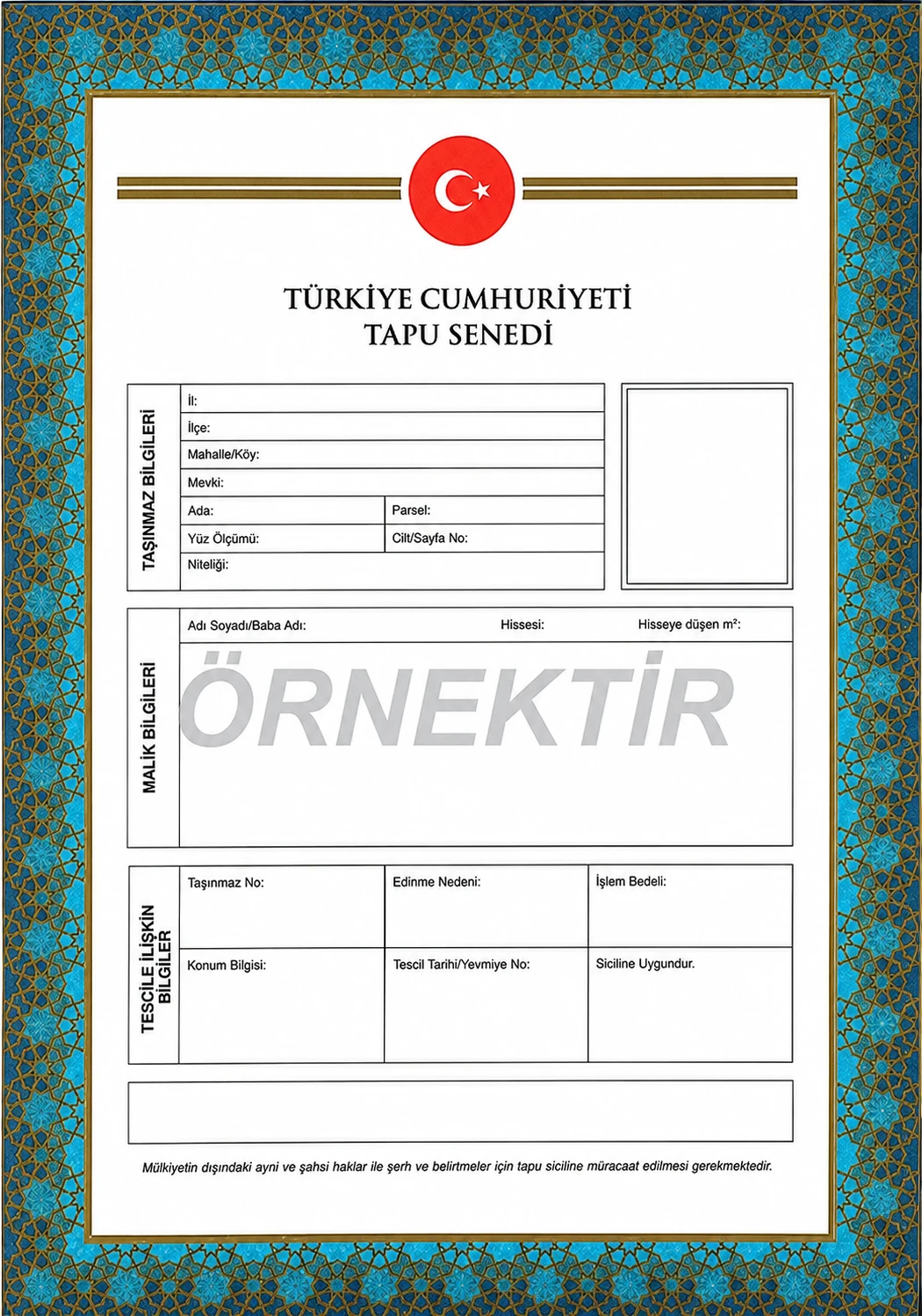
Apple Estates stays with the parties through the process, helps coordinate the people and documentation involved, and confirms that the buyer receives the official title deed.
A private preliminary contract, deposit receipt or full payment on its own does not replace registration at the Land Registry.
What should the buyer do after receiving the Tapu?
Completion at the Land Registry is the central legal milestone, but several practical tasks may remain.
Use the following checklist:
- Receive the keys and all agreed access devices
- Check that the agreed furniture and equipment remain at the property
- Record electricity and water meter readings
- Arrange utility transfers
- Confirm compulsory earthquake insurance where applicable
- Consider additional home and contents insurance
- Notify the building or site management
- Confirm current communal fees and payment details
- Retain the contract, Tapu, receipts and bank records
- Establish how the property will be checked while empty
- Arrange repairs or maintenance identified before purchase
- Obtain current legal and tax advice before offering accommodation for rent
For buildings and independent sections within its scope, valid compulsory earthquake insurance—commonly known as DASK—is checked during title-deed procedures. See the official DASK information.
Common mistakes overseas buyers should avoid
Treating a holiday impression as a complete location assessment
A neighbourhood can feel different in winter, at night or during the busiest summer weeks. Consider daily routines, transport, parking and access—not only the view.
Paying before the conditions are clear
The price, deposit, deadline, included contents and unresolved checks should be recorded before money changes hands.
Assuming every visible part of the property is approved
An attractive attic, terrace room, pool or extension may not correspond with the official project.
Ignoring shared ownership
The buyer must understand what the title legally conveys, not merely which part of the property is being used.
Discovering protected status too late
Official correspondence for a protected property can substantially delay the transaction. Check before accepting a rigid deadline.
Allowing too little time for an overseas transfer
Build a reasonable contingency into the written agreement and speak to the relevant bank before promising a payment date.
Confusing an estate agent’s role with independent legal advice
A local agent coordinates the property search and transaction. A lawyer advises on the buyer’s legal position.
Assuming ownership guarantees residence
A property purchase and a residence-permit application are separate processes.
Accepting unexplained prices or fees
Ask for an itemised written breakdown and retain clear payment records.
How Apple Estates supports overseas buyers
Apple Estates has worked in Fethiye since 2002. Our role begins by listening to how the buyer intends to use the property and helping them compare appropriate locations and realistic options.
Once the buyer and seller agree terms, we help coordinate:
- The written agreement
- Deposit documentation
- Obtaining a tax number
- Turkish banking arrangements
- The foreign-currency purchase document
- Valuation arrangements where needed
- Land Registry paperwork and appointments
- A Land Registry transaction coordinator where appropriate
- The sworn translator
- Communication between the parties
- The Tapu appointment
- Key handover and practical after-sale steps
We aim to make an unfamiliar process understandable and manageable. We also make clear when a question requires independent legal, technical, tax or financial advice.
Property for sale in Fethiye
Explore a small selection of current listings, or browse the full collection to compare areas and property types.

4+1 Detached Villa with Pool for Sale in Seydikemer
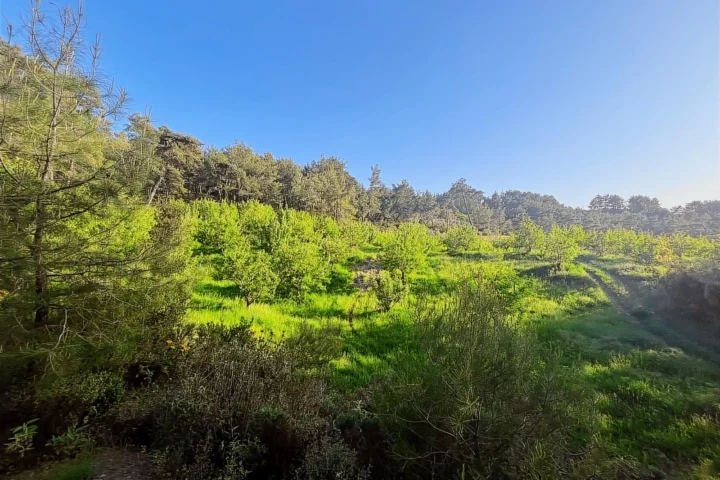
2,135 m² Olive Grove for Sale in Arsaköy, Seydikemer

1,909 m² Apple Orchard for Sale in Arsaköy, Seydikemer
Frequently asked questions
Do I need a lawyer to buy property in Fethiye?
A lawyer is not generally compulsory simply to complete a property purchase. Nevertheless, the UK government strongly recommends that British buyers obtain independent legal advice before committing or paying a deposit. A lawyer can investigate the legal position and advise on the buyer’s individual rights.
Should a foreign buyer budget for a 4% title-deed charge?
Yes. Although the legislation assigns 2% to the buyer and 2% to the seller, normal market practice frequently places the complete 4% cost on the buyer by agreement. The written agreement should state who will pay it.
Is a valuation report compulsory?
TKGM’s current general workflow says the automatic report requirement has been abolished for ordinary foreign acquisitions. A report may still be required for citizenship-related or other particular transactions. Apple Estates checks the current requirements and arranges one when necessary.
What is a Döviz Alım Belgesi?
It is the bank-issued foreign-currency purchase document required for a property acquisition by a foreign individual. It must be organised correctly before the Land Registry transaction.
Can a foreign buyer purchase a property in a protected area?
It depends on the property’s exact designation and the decision or confirmation required from the relevant authority. The process can be lengthy and may sometimes prevent the proposed acquisition. Investigate the status before committing to a short deadline.
Does buying a home automatically give me Turkish residence?
No. Purchasing property and obtaining permission to reside in Türkiye are separate processes. A qualifying residential property may support an application, but eligibility requirements and official approval still apply.
How long does buying a property in Fethiye take?
There is no reliable universal timescale. A straightforward transaction with prepared funds and complete documents can progress more efficiently than a purchase involving international-transfer delays, complicated ownership, alterations or protected-area enquiries. The written agreement should use a realistic deadline for the particular purchase.
Conclusion
Buying property in Fethiye can be manageable when each decision is made in the right order.
Begin by defining how you want to use the property. Compare the areas around your daily life, not only their appearance online. Record the price and conditions before paying a deposit. Check the registered title, approved project and physical building. Organise the bank transfer and foreign-exchange documentation carefully, then complete the official transfer through the Land Registry.
The right outcome is not simply obtaining a Tapu. It is owning a property whose location, legal position, physical condition and ongoing responsibilities suit the life you intend to lead.
To begin, browse current property for sale in Fethiye or contact Apple Estates to discuss your plans.
Sources and official guidance
Rules and administrative charges can change. The following public sources were reviewed when preparing this guide:
- TKGM/Your Key Türkiye: real-estate acquisition by foreign individuals
- TKGM: foreign-currency purchase document requirement
- TKGM/Your Key Türkiye: appraisal information
- TKGM/Your Key Türkiye: protected-area guidance
- Turkish Revenue Administration: property-transfer charge
- TKGM: current revolving-fund service-fee tariff
- Presidency of Migration Management: residence-permit types
- DASK: title-deed and compulsory earthquake-insurance checks
- GOV.UK: buying property in Turkey
Official pages can be amended without notice. Buyers should confirm the requirements for their own transaction before committing funds.